Mosaic Intelligence LabsManifesto · 2026
[5]
Dr. Alison Mackanic, Dr. Ileana Pirozzi
Mosaic Intelligence Labs, Inc. · San Francisco, California
1Opening Notes
The Stanford Biodesign methodology demands immersion [1]. The year is 2018 and we’re spending our days in operating rooms, watching extraordinary people do extraordinary things. We can see the cutting edge of medicine and yet we’re astounded by how much still depends on the experience of the person holding an instrument. We are asked to find “unmet needs”, to imagine better tools for those procedures. But we find ourselves returning to the only question that feels most consequential, beyond any procedure, device, or disease category:
What would it take to scale the surgical knowledge of the very best operators?
That question became Mosaic.
2Scaling surgery
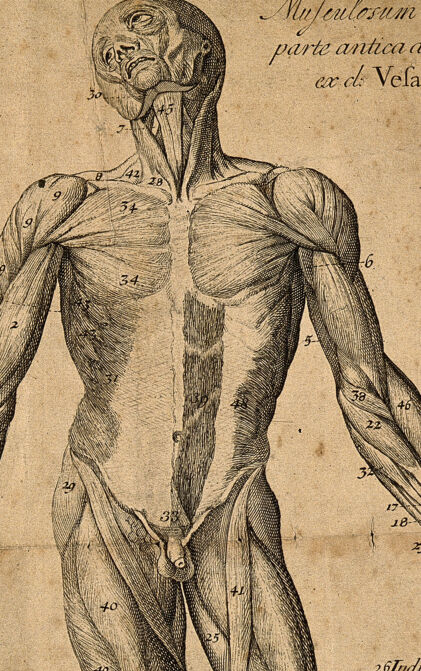
Over two millennia ago, Aristotle described three kinds of knowledge [2]. Episteme – knowledge that’s explicit, can be explained, written down and taught, like mathematics. Techne – knowledge that’s implicit, that can only be mastered through the practice of a craft, and that is embodied in skill and intuition – like dance or painting. And Phronesis – the practical wisdom to know not just what can be done, but what should be done. Surgery is one of the few human endeavors that requires mastering all three.
Much of surgical progress in the last century came from reducing the physiologic toll of reaching disease. Large incisions and wound burden were minimized with laparoscopy, allowing operators to insert and manipulate rigid devices through small ports. Collateral damage was reduced further with the invention of catheter-based navigation, which enabled incisionless surgery by inserting devices through tubes across the body’s network of blood vessels, used as a pathway to reach distal organs. However, as these advancements took hold, they also became increasingly difficult to implement, learn, and scale. Super-specialization arrived and in some cases only one surgeon in the world could do the job. As most industries were becoming subjects of early machine intelligence in the 2020s, knowledge of surgery – with its irreducible variability and its poetic opacity to machines – remained largely contained in human hands.
Surgical knowledge – today – cannot be taught or shared, creating a profound constraint on the availability and the quality of care.
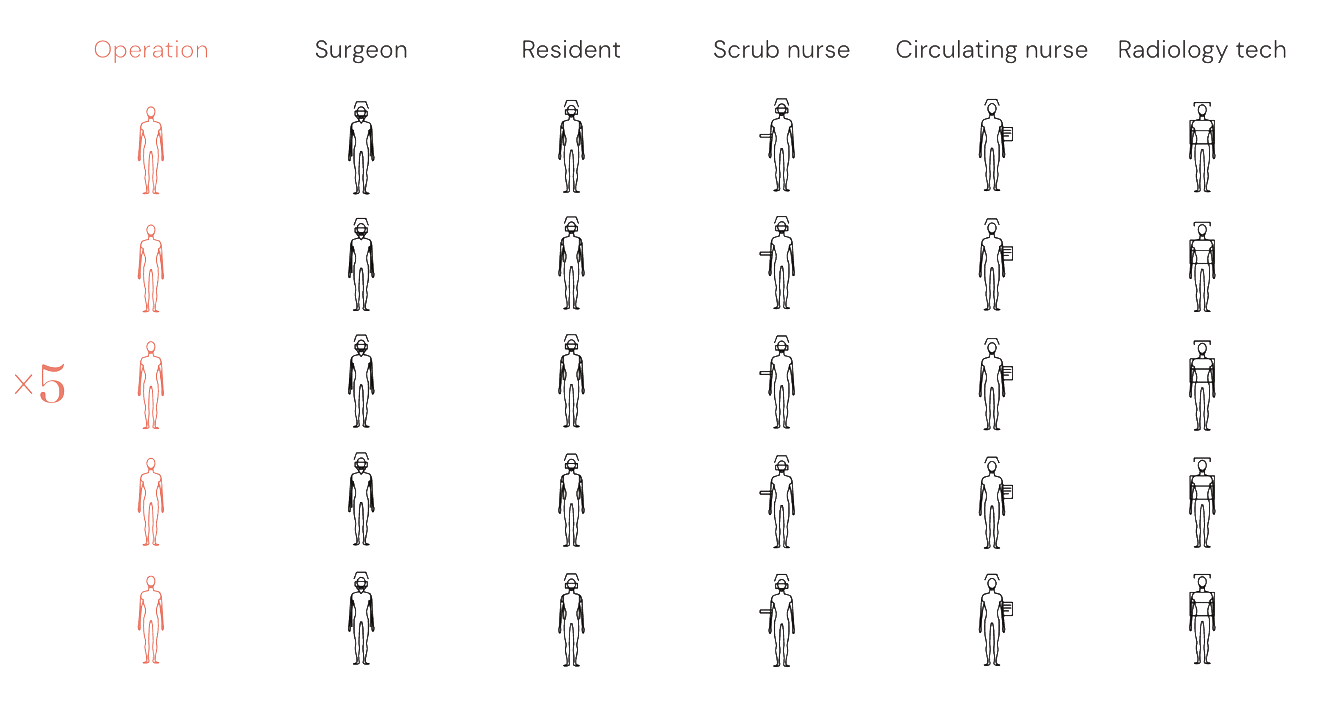
As aging populations drive the incidence of chronic disease, raise procedural volumes, and balloon costs, our surgeons and nurses still require decades to train. The result is a human-labor bottleneck, with outcomes that hinge directly on which surgeon is on call, in which hospital, and after how many hours of sleep.
Picture today’s surgical outcome distribution: a wide bell curve driven by high variability and operator dependence, first quantified and described by Dr. John Birkmeyer as the “Volume-outcomes Curve” [3]. It’s the fundamental driving law of surgery.
A collaboration between a human surgeon and machine intelligence creates the possibility of a different relationship among experience, labor, and output. Intelligent machines can collaborate with humans to:
- Compress the variance of the curve (i.e. improves consistency of outcomes);
- Shift the curve to the right (i.e. scales the best outcomes);
- Expand the total number of procedures that can be safely performed (i.e. Increase access and capacity).
Knowledge gained in one procedure could contribute to assistance in another. Learning could accumulate across practitioners rather than remain largely dependent on each individual’s exposure.
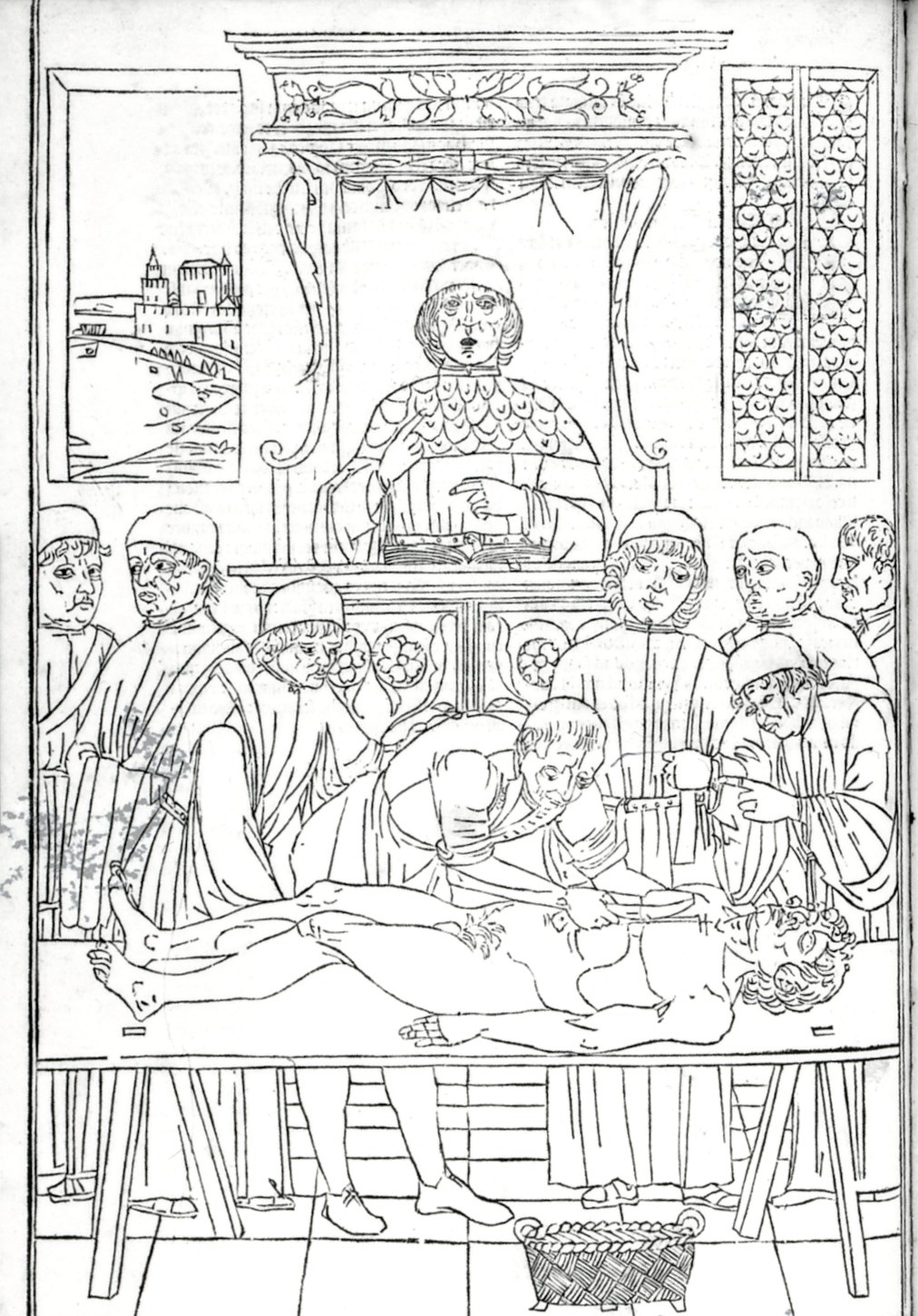
3The Umwelt is the foundation of embodied intelligence in surgery
In robotics, the term “world model” is often used to describe a computational construct that represents an objective reality in a way that can be understood by the robot and can be used to predict how that world will change during physical multi-agent interactions. Yet biological behavior reveals a more subjective, nuanced truth.
The biologist Jakob von Uexküll used the term umwelt to describe an organism’s perceptual world: the aspects of its surroundings made meaningful through its senses, cognitive processes and ways of acting [4].
Every organism – including you and I – inhabits its own umwelt, its unique perceptual world defined by the sensory channels and cognitive processes it possesses. In nature, the umwelt is actively shaped by the organism’s physical interactions with the world, evolving in a functional loop to serve survival, purpose and engagement with the world around it.
Surgical tools and machines currently operate without an umwelt. Despite massive and unique exposure, our instruments do not build internal models of the world they encounter. There is no evolving loop between perception and action. They are structurally locked out of the ability to become intelligent.
Why constrain machines to the limits of human perception? Endowing surgical machines with perception means choosing a purpose-built perceptual architecture that goes beyond the limits of human awareness: high-resolution, multimodal sensing embedded at the tool–anatomy interface.
The umwelt is the foundation of embodied intelligence in any physical domain, including surgery. Only when a surgical machine perceives through its own native senses can it learn to model its environment, adapt in real time, and make implicit knowledge explicit, transforming the proprioceptive and anticipatory intuition that defines surgical mastery into something observable.
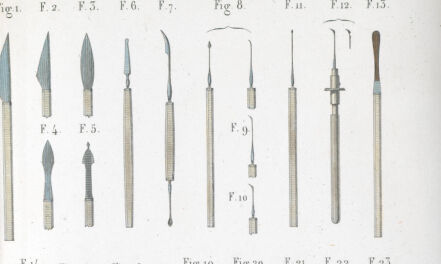
4Three Eras of Robotics in Surgery
The most consequential robotics company in the world is a surgical robotics company. We break down what’s been achieved and what’s next.
- 3.1Surgical Augmentation Platforms (SAP)
- An era defined by systems such as Intuitive Surgical’s daVinci robot aimed to amplify human capability in laparoscopic surgery: vision is magnified, hand tremor suppressed, tool motion scaled for precision. The defining feature is direct and continuous human control. The robot augments, but it does not think.
- 3.2Surgical Awareness Assistants (SAA)
- Intelligent surgical tools have perceptual awareness and the ability to develop a persistent clinical memory: storing procedural experience, recognizing context, providing intraoperative reminders, and mentoring operators through prior cases and guidelines. In this paradigm, physical autonomy remains fully vested in the surgeon, but the machine creates a shared layer of cognitive awareness.
- 3.3Intelligent Surgical Machines (ISM)
- Intelligent surgical systems would leverage perception, reasoning, and actuation to execute procedural steps with minimal human oversight. The promise is consistent optimal performance, scalability, and expanded access.
At Mosaic, we believe this evolution is inevitable. Mosaic extends the awareness of surgeons by building intelligent surgical tools that allow humans to learn and operate beyond their own perceptual constraints.
We recognize that embedding intelligence in surgery’s tools is not simply an engineering challenge; it is a clinical, ethical, and social one. Hippocrates reminds us that medicine and surgery are not mechanical acts, but deeply human practices – he says the mandate of a physician is to “cure sometimes, treat often, and care always”. The practice of knowing not what can be done, but what should be done, will always remain a human responsibility that cannot be delegated.

5A uniquely human purpose
The year is now 2026. We’re in San Francisco, where much of the city is building AI and robotics systems and is starting to confront uncomfortable questions around human labor replacement. Our attention is on healthcare, which faces a different problem: how to make a scarce human resource more widely available.
Clinical teams are under pressure, demand for care is growing, training still takes decades, and asking people to work harder cannot be the enduring answer to a limited capacity.
We need fundamentally new ways to increase what a team can accomplish with the time, expertise, and resources it has.
Mosaic sees an opportunity to direct machine intelligence toward a deeply human purpose: expanding our capacity to care for one another. We take that outcome as a responsibility to build systems that help clinical teams, earn their trust, and make treatment available to more people.
References
- Yock PG, Zenios S, Makower J, et al. Biodesign: The Process of Innovating Medical Technologies. 2nd ed. Cambridge University Press; 2015.
- Aristotle. Nicomachean Ethics, Book VI.
- Birkmeyer JD, Siewers AE, Finlayson EVA, et al. Hospital volume and surgical mortality in the United States. N Engl J Med. 2002;346(15):1128–1137.
- von Uexküll J. Theoretische Biologie. Berlin: Gebrüder Paetel; 1920.
- Vaswani A, Shazeer N, Parmar N, Uszkoreit J, Jones L, Gomez AN, Kaiser Ł, Polosukhin I. Attention is all you need. Advances in Neural Information Processing Systems 30 (NeurIPS 2017):5998–6008.
1